


Studying in China is an exciting opportunity, but adjusting to life in a new country comes with its own set of experiences and challenges. From daily routines to cultural differences, understanding what to expect can make your transition smoother. Here’s a complete guide for international students preparing to live and study in China.
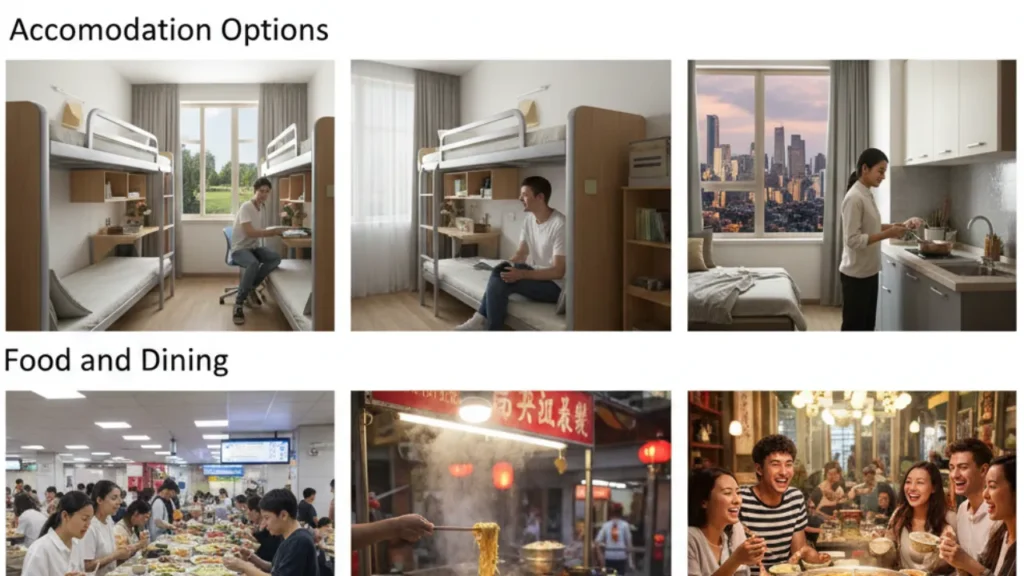
Accommodation Options
International students in China typically live either on campus or in private apartments.
- On-Campus Housing: Most universities provide dormitories with shared or private rooms. Dorms often include amenities such as Wi-Fi, laundry facilities, and meal plans. Living on campus helps you integrate quickly with other students and simplifies daily logistics.
- Off-Campus Housing: For students who prefer more independence, private apartments in the city are available. While usually more expensive, they offer greater privacy and flexibility.
Food and Dining
Chinese cuisine is diverse, flavorful, and varies by region. Most universities have cafeterias offering affordable meals for students. Street food and local restaurants provide an opportunity to explore authentic dishes like dumplings, hotpot, noodles, and baozi. For international students with dietary restrictions, larger cities often have international grocery stores or delivery options.
Transportation
China has one of the most advanced transportation networks in the world.
- Public Transport: Buses, metros, and taxis are convenient and affordable. Cities like Beijing, Shanghai, and Guangzhou have extensive subway networks.
- Biking and E-Scooters: Many students use bicycles or electric scooters for short commutes, thanks to dedicated bike lanes and ride-sharing apps.
- Long-Distance Travel: High-speed trains connect major cities quickly, making it easy to explore China during weekends or holidays.
Daily Life and Convenience
China’s cities are known for their convenience and modern infrastructure. Digital payment platforms like Alipay and WeChat Pay are widely accepted, making transactions seamless. Supermarkets, shopping malls, and delivery services are accessible, allowing students to manage daily life efficiently.
Language and Communication
Mandarin is the primary language in China. While many students can manage with English, especially in larger cities and on international campuses, learning basic Chinese phrases is highly recommended. It helps with daily tasks, enhances social interactions, and enriches your cultural experience.
Healthcare and Safety
China is generally a safe country for international students. Universities often provide health insurance and access to on-campus clinics. Major cities have hospitals with English-speaking staff. Safety is also a strong point, with well-organized public spaces, reliable transportation, and low crime rates in most areas.
Social Life and Extracurricular Activities
Living in China offers plenty of opportunities for socializing and personal growth. Universities host clubs, sports teams, cultural events, and student organizations where you can meet friends from around the world. Participating in these activities can help you build a strong support network and make the most of your experience.

Cultural Adaptation
Adjusting to a new culture may take time. International students may experience culture shock initially but gradually adapt to the Chinese way of life. Embracing local customs, participating in festivals, and learning about Chinese traditions can make your stay enriching and enjoyable.
Academic Life
Chinese universities have rigorous academic standards. Expect a mix of lectures, labs, group projects, and assessments. Professors encourage active participation and independent research, preparing students for global career opportunities.
Conclusion
Living in China as an international student is a transformative experience. With modern cities, convenient infrastructure, diverse communities, and rich cultural exposure, students gain more than just an education—they grow personally and professionally. By preparing ahead and embracing the local lifestyle, your time in China can be both exciting and rewarding.
Comments are closed